All recipes / American
Four Butts, One Pit: Pull Day Pork
30 lb of Boston butt on the Pit Boss, three flavors, ready to pull at 4:00 pm
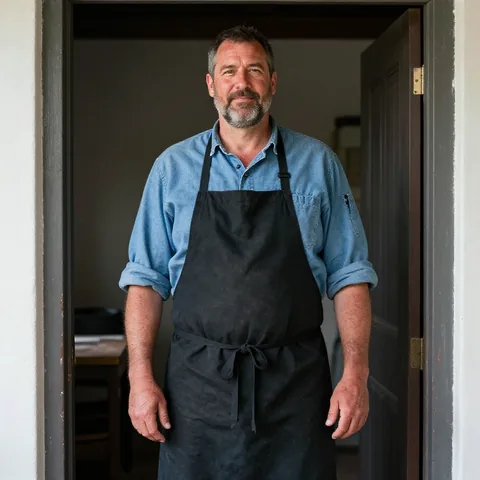
Four butts is a long cook and I am not going to dress that up. The pit is Malakili's Pit of Fire, the Pit Boss 1300, one temperature for the whole load: 275F. I picked it because four crowded butts at 225 would have you lighting a fire at midnight, and a pellet grill lays down thin smoke anyway, so the extra hours at 225 buy less than they would on the offset I was raised on. Light at 3:30 am, butts on at 4:00 am, and the clock runs backward from a 4:00 pm plate with a cooler rest in the middle that absorbs whatever the pork decides to do. Three flavors across four butts: two Central Texas salt and pepper (mine, by blood), one achiote butt out of Rosa's Yucatan cards, one Eastern Carolina vinegar butt (not mine, learned as a guest, named below). Reused from the house book: the achiote, citrus, paprika, cumin and oregano from Rosa's Cochinita Pibil and Smoked Mexican Pork Shoulder cards, the butcher paper wrap-at-the-stall call from the Smoked Mexican Pork Shoulder card, and the pickled red onions card for the plate. Shared cook is clean: no heat, no tomato, no cilantro in anything the whole table eats. Heat goes on the table in a bottle.
How it's made
1The Schedule, Backward from 4:00 pm on 10/24
Everything runs backward from the plate. The rest in the cooler is the buffer, and it is the reason this works for a family: the pork can finish anywhere from 11:30 am to 2:30 pm and still be shredded at 3:00 pm. Hours per pound on a 7.5 lb butt with four in the pit at 275F: 1.0 hr per lb is the fast day (7.5 hrs, off at 11:30 am), 1.2 is the usual day (9 hrs, off at 1:00 pm), 1.4 is the slow day (10.5 hrs, off at 2:30 pm). If they are not tender by 2:30 pm, see the rescue step. Use the clock for planning and the probe for deciding.
- 10/23, by 1:00 pm: clean the Pit Boss for a 10 hour run. Empty the ash from the firepot, replace the foil on the drip tray, empty the grease bucket. A greasy tray plus 30 lb of pork is how a grease fire starts. Fill the hopper and confirm what it holds (I do not have your hopper capacity on file).
- 10/23, by 6:00 pm: season all four butts (steps below), wrap each in plastic or lay in pans, and put them in the fridge at 40F or lower. If the fridge cannot hold 30 lb, use a cooler with ice, 40F or below, drain the meltwater. Season both chickens too (see the chicken card).
- 10/23, any time: make the Eastern Carolina vinegar sauce, the pickled red onions, and clear a cooler (50 quart or larger) for the rest.
- 10/24, 3:15 am: up. Check the wind. If it is gusting past 15 mph, put the grill's back to it or build a windbreak. Cold and wind burn pellets and slow the climb, they do not break the cook. Top up the hopper.
- 3:30 am: lid closed, controller to 275F, light it. Let it run its start-up cycle. It should be steady at 275F by about 3:55 am.
- 4:00 am: butts on, fat cap up, straight from the fridge. Leave about an inch between them. Leave-in probe in the thickest part of the biggest butt, away from the bone. Lid shut. Put the Mexican butt where you can find it (a toothpick flag or a foil tab on its shelf).
- 4:00 am to 7:00 am: leave it alone. Watch the probe on your phone, not through the lid. Every peek costs 10 to 15 minutes on a pellet grill.
- 7:00 am: first lid-open. Check the hopper (top it up if under half), check bark color. Sunrise is around 8:00 am.
- 7:30 am to 9:00 am: internal reaches about 150F to 165F and the stall starts. Pork holds there for 1 to 3 hours as moisture evaporates off the surface. It is not broken. Go sit down.
- 9:30 am to 10:30 am: wrap each butt when the bark is set (dark mahogany, does not smear when you press it) and it reads 160F to 170F. Do not wrap before the bark sets. See the wrap step.
- 12:00 pm: first probe-test. Expect 185F to 195F. Check the hopper again.
- 11:45 am: both chickens out of the fridge (Rosa's Mexican bird comes out about 45 minutes before it goes on). 12:30 pm: chickens on the pit, 275F, skin side up, upper rack if the 1300 has one. Expect 1 1/2 to 2 1/4 hrs to thigh 175F plus. Rosa's Pollo Ahumado en Adobo Rojo card says 2.5 to 3 hrs because it left the pit temperature to me, and at 275F the time is shorter. Chicken times are on the chicken card. If six pieces will not fit, the chickens go in the Cafe oven at 325F at 1:30 pm on sheet pans instead.
- 11:30 am to 2:30 pm: each butt comes off when it is probe-tender, usually around 200F to 205F: the probe slides in like warm butter all over, and the bone wiggles. Pull each one the minute it is ready, do not wait for the pair. Latest pull is 2:30 pm, because the rest is never under 1 hour.
- Pulled from the pit: straight into the preheated cooler, wrapped, packed tight with towels in every gap. Rest 1 hour minimum, 4 hours maximum.
- 2:00 pm to 2:30 pm: chickens out at thigh 175F plus, rest 20 to 30 minutes, shred while warm, hold covered in the 170F oven.
- 3:00 pm: open the cooler. Probe the center: it must be 140F or higher. Shred (steps below), 3:00 to 3:40 pm.
- 3:40 pm: toss each pan with its finish. 3:50 pm: pans in the 170F oven or covered on the table. 4:00 pm: serve.
- Rescue if you are behind: at 12:00 pm, if the butts read under 175F, raise the pit to 300F. At 1:00 pm, if any butt reads under 190F, move it to a pan, cover tight with foil and finish in the Cafe oven at 300F. A butt that is not probe-tender is chewy no matter what the thermometer says, so push dinner back before you pull it early.
2Fire Plan: 275F, One Temperature, Why
On an offset I would run 250 and feed the fire by hand. On a pellet grill the controller holds the number, so the only decision is where to set it. 275F gives 1.0 to 1.4 hrs per lb for a butt, which is the only setting that gets four butts off with a real rest before 4:00 pm without lighting at midnight. The cost is lighter smoke than 225F would give, and a pellet grill does not give much to start with. Two cheap fixes: a pellet smoke tube lit and laid on the grate at 4:00 am adds visible smoke for the first 4 hours (the window where meat takes smoke best, before the bark seals), and a hickory or oak pellet instead of a fruit blend gives the pork backbone. Also, a butt that crowds the grate cooks slower than a lone butt, which is why my range is wider than a recipe for one.
- Set 275F, hold it. If the controller drifts 15F either way, ignore it. If it stays 25F or more off for 30 minutes, check the hopper and the firepot (empty hopper or a jammed auger is the usual cause), not the lid.
- Pellets: expect to burn roughly 1.5 to 2.5 lb per hour at 275F and more in cold wind. Two 20 lb bags covers it with a margin. Check the hopper at 7:00 am and 12:00 pm.
- Do not open the lid to spritz. This pit loses too much heat on every open. The wrap is what keeps the surface moist.
- Open the lid only for the 7:00 am check, the wrap, and the pulls.
- Open questions I still carry on your unit: its true hopper capacity, whether its controller has a smoke setting, and how it runs in a late-October wind. Log the actual pit temps and write down what it did, and the next long cook gets a better schedule.
3Season Today, 10/23: Three Profiles, Four Butts
Seasoning the day before is a dry brine: salt pulls moisture out, dissolves, and carries the seasoning back in. That is why the rubs go on today and not at 4:00 am. Salt is 30 g per 7.5 lb butt (under 1 percent of the raw weight), weighed if you have a gram scale, measured if you do not. My split: two Texas, one Mexican, one Carolina. Texas is the safe crowd pleaser and the best freezer pork, the Mexican butt pairs with Rosa's chicken for tacos, and the Carolina butt is the sharp one that makes the table talk. If you want only two flavors, make it two Texas and two Mexican, or two Texas and two Carolina. Do not inject. A butt has plenty of fat and the dry brine plus the wrap does the work. If you insist, inject the Carolina butt only: 1 cup apple juice, 1/4 cup cider vinegar, 2 tsp salt, 12 spots, and cut 1 tsp salt from the rub.
- All butts: pat dry. Trim any loose flaps of fat hanging off, but leave the fat cap, 1/4 inch or thicker. Score the fat cap in a shallow diamond (1/4 inch deep, 1 inch apart), do not cut into the meat on the Texas and Carolina butts.
- PROFILE 1, CENTRAL TEXAS SALT, PEPPER AND GARLIC (2 butts, mine by inheritance, the way a market smokes it: salt, coarse black pepper, nothing hiding). Per butt, mix: 30 g kosher salt (about 3.5 tbsp Diamond Crystal or 2 tbsp Morton), 1.5 tbsp coarse black pepper, 1 tbsp granulated garlic. This is lighter on pepper than a Texas brisket rub, for the mild plate, which can do pepper but not heavy pepper. No binder: a butt is wet enough. Rub every surface and into the scores. Do two butts the same way.
- PROFILE 2, YUCATECAN ACHIOTE BUTT (1 butt, Rosa's house: cochinita pibil and the Smoked Mexican Pork Shoulder are hers, not mine, and I used her flavors). In the Vitamix, blend per butt: 1/4 cup achiote paste, 1/2 cup orange juice, 1/4 cup lime juice, 1 tbsp cider vinegar, 6 garlic cloves, 1 tbsp sweet smoked paprika, 2 tsp ground cumin (toasted whole seed if you have it), 1 tbsp Mexican oregano, 1 tsp black pepper, 1/4 tsp allspice, 20 g kosher salt (the paste already has salt, so I cut it). This is the marinade from the Cochinita Pibil card, scaled and with the Smoked Mexican Pork Shoulder's paprika. Two things changed from the cards and I am saying so: no chili powder and no habanero in the shared butt, because heat does not go in anything the mild plate eats. Score the butt 1 inch deep every 2 inches, as the shoulder card does, and work the paste into every cut. If the table confirms that a mild ancho powder is fine for the mild plate, 1 tbsp can go back in. That is not my call, so I did not decide it.
- PROFILE 3, EASTERN NORTH CAROLINA VINEGAR BUTT (1 butt). Not mine. Eastern Carolina vinegar and pepper barbecue is a Black-rooted whole-hog tradition from the eastern part of the state, and I learned the finish as a guest at someone else's pit. The sweet paprika rub is my adaptation from Memphis dry-rib thinking, not an Eastern Carolina rub, which is just salt and pepper. Per butt: 30 g kosher salt, 1 tbsp black pepper, 2 tbsp sweet paprika, 2 tbsp light brown sugar, 1 tbsp garlic powder, 1 tbsp onion powder. Binder: 2 tbsp yellow mustard rubbed over the whole butt first (the flavor cooks off, it just holds the rub). The sugar will darken fast at 275F, so this is the butt you wrap first, at 160F.
- Wrap each butt in plastic or lay it in a pan and cover. Fridge at 40F or lower, fat cap up, the Mexican one on the bottom shelf in a pan (the marinade drips).
- Raw pork juice and the achiote paste stain everything. Gloves, a sheet pan under all of it, and wash the knife and the board in hot soapy water before they touch anything else.
4The Wrap
The wrap is a time decision and a texture decision, not a repair. Paper breathes: it keeps most of the bark and takes a little longer. Foil steams: it pushes through the stall faster and the bark goes soft. Banana leaf plus foil steams the way cochinita is supposed to. On a day when four butts are fighting the clock, I would rather have the speed and I am saying out loud what it costs. Pulled pork gets its bark chopped into the meat anyway, so foil costs you less here than on a brisket.
- Texas butts (2): butcher paper at 165F to 170F with a set bark. Two overlapped sheets, fold the sides in, roll tight. If you cannot find paper, use heavy-duty foil and accept the softer bark.
- Carolina butt: paper at 160F, with 1/4 cup apple juice splashed on the butt before it is wrapped. Fold tight.
- Mexican butt: banana leaf then foil at 165F. Soften two leaves over a gas flame or in a hot pan for a few seconds each so they bend, lay them overlapping, set the butt in the middle, fold up, then wrap the whole package in heavy-duty foil, seam up. No leaf? Foil only.
- Back on the pit with a probe through the wrap into the thickest part. Do not unwrap to check.
5Rest, the Faux Cambro
The rest is part of the cook. A butt held in a hot cooler for 2 to 3 hours is better than one pulled at the peak, and it hands you a flexible serving time. Never under 1 hour. A cooler with the lid shut will hold 140F for 4 hours or more, but I am putting a probe in before I trust it, because every cooler is different.
- By 11:30 am, well before the first pull: put 2 gallons of hot tap water in the cooler, close the lid for 15 minutes. Dump it, dry it.
- Line the bottom with a towel. Pull each butt from the pit in its wrap, set it in, and tuck towels in every gap. Fill air space with towels. Shut the lid. Do not open it again.
- Rest 1 hour minimum and 4 hours maximum. At the end, probe the center of one: it must be 140F or higher. If it is under 140F, the butt goes back into a covered pan in a 275F oven until it hits 165F, then shreds.
- If the cooler is too small, split into two coolers.
6Shred and Finish, 3:00 to 3:40 pm
Four butts, two people, gloves on, about 40 minutes. Shred while the pork is hot. Cold pork shreds into mush and dry strings. Pull in chunks, not threads: some bark in every bite. The finish is not a fix. It is the last 5 percent of the flavor, and it is what separates the three butts on the plate.
- Set a rimmed tray under each butt and open the wrap. Pour every drop of juice into a fat separator or a cup. Skim the fat off and keep the juice.
- Pull the bone: it should slide out clean with one hand. Pull the pork into chunks with gloved hands or two forks. Discard the thick fat pockets and the loose gristle, keep the bark.
- TEXAS: toss with 1/2 cup skimmed juice and 1/4 cup cider vinegar per butt. Taste. It will almost certainly want salt, add by the pinch. No sauce. Serve on white bread with dill pickle chips and raw sliced white onion, the way the market did it. Sauce is a condiment, not a cure, so the argument starts and stops there.
- MEXICAN: toss with the wrap juices (skim the fat), the juice of 1 lime and a pinch of salt. Serve on warm corn tortillas with the Pickled Red Onions card. Cilantro, sliced habanero and salsa go in a separate bowl on the hot plate's side of the table with their own tongs, since the mild and medium plates do not do cilantro.
- CAROLINA: toss with Eastern Carolina sauce: 1 1/2 cups cider vinegar, 2 tbsp light brown sugar, 2 tsp kosher salt, 1 tsp black pepper, stirred until the sugar dissolves. Use about 3/4 cup per butt and put the rest in a bottle on the table. Serve on a soft bun with a vinegar slaw. Red pepper flakes and hot sauce go on the table in bottles, never in the sauce, for the hot and medium plates only.
- Pans: keep each flavor in its own labeled pan so nobody guesses. Cover tight with foil. Hold in the Cafe oven at 170F (or whatever its warm setting is, as long as the pork stays 140F or higher) until 4:00 pm.
7The Safety Numbers
This is the one place I do not get to be folksy.
- Pork is safe at 145F, but we are cooking for collagen, not safety: 200F to 205F for pulling.
- Chicken to 165F minimum everywhere, 175F or higher in the thigh for shredding.
- Hot food stays at 140F or higher. Cold food stays at 40F or lower. Pans on the serving table: 2 hours, then back into the fridge or the oven.
- Leftovers: out of the serving pans into shallow pans (2 inches deep or less) within 2 hours of serving, into the fridge uncovered until cold, then covered. Fridge 3 to 4 days.
- Reheat leftovers to 165F every time, in a covered pan with a splash of juice or broth.
8Freezing the Leftovers
I have never in my life cooked the right amount. There will be pork left and you will be glad. Frozen pulled pork with its juices is one of the best things in a freezer.
- Cool in shallow pans first, never freeze warm. Pack in 1 lb portions with some of the juice or finishing liquid, in gallon freezer bags, pressed flat, air out, labeled with the flavor and the date: 10/24.
- Keep the flavors separate. Freezer life is 3 months for the best flavor.
- Thaw in the fridge for 24 hours (or in cold water, sealed bag, 1 hour per lb). Reheat in a covered pan with a splash of liquid to 165F.
- The Alabama white sauce on the chicken card does not freeze. Leave sauces out of the bags.
9Lineage and the Plate
State the lineage on the artifact, so it survives past this week.
- Central Texas salt, pepper and garlic pork: mine, Lockhart, by inheritance. The butt is not the traditional cut (Central Texas is beef and sausage first), but the method is.
- Achiote butt: Rosa Fuentes's cochinita pibil and Smoked Mexican Pork Shoulder cards are the house's Yucatecan and Mexican pork. I changed the heat and the wrap only, and named what I changed.
- Eastern Carolina vinegar finish: Eastern North Carolina, a Black-rooted tradition I learned as a guest. The rub is my own adaptation.
- The plate: white bread, pickle chips, raw sliced white onion, a vinegar slaw and a creamy slaw, the Pickled Red Onions card, Yucatecan Black Beans, corn tortillas. No tomato anywhere. Heat in bottles on the table: hot sauce, red pepper flakes, sliced habaneros, pickled jalapenos.
- Mild plate: no heat anywhere in the shared pans, pepper is fine in moderation, no cilantro, no tomato. If you are unsure about an ingredient, ask the cook, do not guess.
Rate this recipe
Photos from your table
Loading…
Comments
Loading…