All recipes / Greek
Ladolemono Roasted Vegetables
Potatoes, carrots, peppers, zucchini and squash, roasted in two waves, finished raw with lemon, oregano, feta and olives
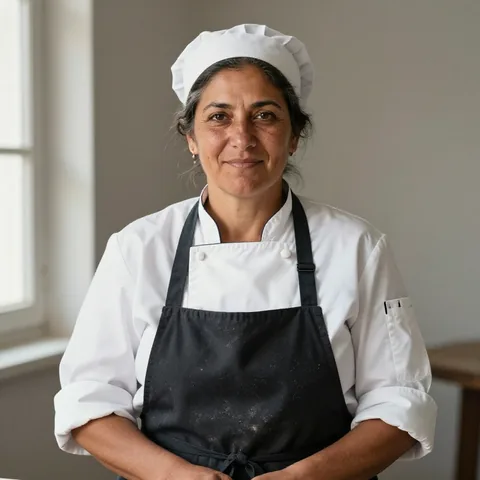
Ladolemono, koritsi mou, is oil and lemon beaten together until they don't look like they want to be together, and it goes on more things in a Greek kitchen than any sauce I know: fish, horta, grilled meat, and vegetables straight off a hot pan. This isn't ladera, the slow oil-braise, because a braise takes an hour on the stove and what's wanted here is a pan that comes out of a hot oven alongside burgers off the smoker. What it keeps from ladera is the principle: the oil is not there to help the vegetables not stick, it is most of the flavor, and you use more of it than looks reasonable. Patates lemonates, lemon roast potatoes, is the other half of the DNA here, and it's a door dish for a reason, everybody eats lemon and potato.
No tomato anywhere in this, which is the standing rule in this kitchen, but it was never a fight to begin with: this dish never wanted one. Of the vegetables on this list, potatoes, carrots, peppers, zucchini and yellow squash are the real Greek roasting vegetables, the ones that show up in briam and in every taverna's fourno tray. Corn on the cob I'm leaving out on purpose. Corn isn't part of this cuisine's vegetable vocabulary at all, and dropping an ear of it on a Greek tray to fill the pan would be exactly the kind of dishonest substitution I don't do. Broccoli I'm leaving out too. It isn't Italian-Anglo the way I sometimes hear it called, but it genuinely has no place in Greek cooking, we don't roast it, we don't really use it. If either of those needs a home on the table, it belongs on somebody else's board, not mine. What's below is honest, oil-forward, and it stands on its own next to the burgers without apologizing for what it isn't.
How it's made
1Cut for the Clock, Not for Looks
This is the whole technical problem and it gets solved at the cutting board, before the oven is even hot. Potatoes and carrots are dense, they need the longest time and the most heat contact to cook through without burning the outside first. Peppers are mostly thin wall and air, they cook fast. Zucchini and yellow squash are almost entirely water, cut them small like a stir-fry and they will collapse into a wet, grey pile before the potatoes are even tender. Everything gets cut to fight its own nature.
- Potatoes: halved, quartered if large, aiming for pieces about 1.5 inches so cut side has real surface area to brown.
- Carrots: cut on the bias into chunks close to the same size as the potatoes, roughly 1 to 1.5 inches, so the two dense vegetables cook at the same rate together.
- Peppers: cut into pieces about 1.5 inches, keep them chunky, not sliced thin, thin peppers turn to rags before the potatoes are done.
- Zucchini and yellow squash: cut into thick half-moons or rounds a full inch across, bigger than instinct says. This is the single most important cut on the board. Thin squash is where this dish goes to mush.
- Corn and broccoli stay off this board entirely, neither belongs in a Greek roast, and forcing them in would cost the dish more than it adds. Cook them another way if the table wants them.
2Two Waves in a Hot Oven
One pan, one temperature, everything dumped in together is how home cooks end up with raw potato centers next to squash paste. The fix is staging by density, not par-boiling. Par-boiling waterlogs the potato and works against the sear I want. A dry, staggered start does the same job better and keeps the flavor concentrated instead of diluted into a pot of water first.
- Oven to 425F (220C). Put your sheet pan or pans in the oven while it heats, empty, so they're already hot when the vegetables hit them, that's what starts the sear immediately instead of the vegetables steaming in their own moisture for the first five minutes.
- Toss the potatoes and carrots with 3 Tbsp of the workhorse olive oil, the smashed garlic, 1 tsp of the oregano, 1 tsp salt, and a good grind of pepper.
- Pull the hot pan out, spread them in one layer with real space between pieces, they should not be touching. If your pan can't hold all of it without crowding, use a second pan rather than pile it up. Crowding steams instead of roasts, no exceptions.
- Roast 20 to 25 minutes, until the cut sides are starting to caramelize and a knife goes in with slight resistance, not fully tender yet, about 80 percent there.
- Meanwhile toss the peppers, zucchini and squash separately with 2 Tbsp oil, the remaining 1/2 tsp oregano, and a half teaspoon of salt. Keeping them separate until now matters, they release water and you don't want that water sitting under the potatoes turning them soft.
- Pull the pan, rearrange the potatoes and carrots to open space, and add the peppers, zucchini and squash in among them, still in a single layer.
- Back in for 15 to 18 minutes more, until the peppers have blistered spots, the squash is tender but still holding its shape, not collapsed, and the potatoes are fully cooked through with browned, crisp edges.
3Ladolemono, Off the Heat
Dried oregano and garlic can take the oven, that's why they went in raw at the start, the heat blooms the oregano and mellows the garlic without either burning. Everything soft and bright does not belong anywhere near that heat. Fresh herbs go grey and lemon loses its lift if it ever sees the oven, and feta stops being feta the moment it fully melts, it turns into a sauce instead of the salty, creamy counterpoint the dish needs. All of that goes on at the very end, off heat, while the vegetables are still hot enough to soften the feta at the edges but not hot enough to cook it away.
- Whisk the juice of both lemons with the zest of one, into 3 Tbsp of the good finishing olive oil, a pinch of salt. That's ladolemono.
- Pull the vegetables straight from the oven onto a serving platter, don't let them sit and steam in the pan.
- Pour the ladolemono over while they're still hot, and toss gently, you want it coating everything, not pooling at the bottom.
- Scatter the kalamata olives over.
- Hand-crumble the feta over in big pieces, not a fine crumble, you want to bite into actual chunks of it.
- Tear the dill or mint over the top last, right before it goes to the table, so it's still bright green and not wilted from the residual heat.
4To the Table
This is a side sitting next to smoked burgers off the flattop, it should read as a proper dish, not an afterthought pile of vegetables. Room temperature is not a failure state here, it's how a lot of Greek vegetable dishes are actually served, the flavors open up as it cools slightly.
- Serve warm or at room temperature, both are correct, this dish does not need to arrive scalding.
- Good crusty bread on the table alongside it is not optional in my kitchen, there's oil and lemon juice pooling on that platter by the end and it should not go to waste.
- If it sits, it holds fine for an hour at room temp before the feta starts to sweat too much. After that, refrigerate and bring back toward room temperature before serving again, don't reheat it hot, you'll cook the squash further and lose the herbs.
Rate this recipe
Photos from your table
Loading…
Comments
Loading…