All recipes / Mexican
Pollo Ahumado en Adobo Rojo
Spatchcocked smoked chicken, guajillo and ancho adobo with achiote, built for shredding
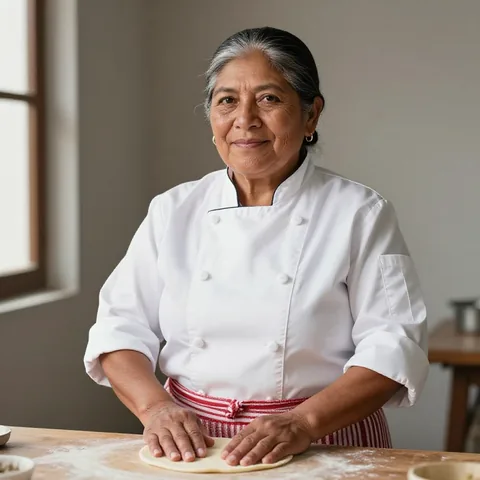
This is the Mexican bird for the shredding dinner, riding beside Dutch's pork and his standard chicken. It is a pollo en adobo rojo: dried chiles toasted, soaked, blended and fried into a paste, then pushed under the skin and left to work. I borrow the achiote and bitter-orange logic from the house cochinita pibil (cochinita-pibil) because it is what makes a smoked bird taste Mexican instead of merely red. The chiles are guajillo and ancho only, seeded and deveined, because they give color and fruit and almost no fire. The bird carries no real heat. Heat lives in the hot-plate salsa on the side. There are no tomatoes and no cilantro anywhere in it, by house rule. Honest note: even deveined, dried chiles are not zero capsaicin. The fully safe bird for the mild plate is Dutch's standard chicken. If you want this one fully heat-free, use the paprika variant at the bottom of the adobo step.
How it's made
1Why This Direction: Guajillo and Ancho, Achiote for the Soul
Four candidates, one answer. Chipotle in the bird would put smoke on smoke and, worse, would put capsaicin in the meat the mild and medium plates eat, so it goes in the hot-plate salsa instead. Achiote alone is Yucatan and gives color and earth but little chile depth. Guajillo alone is bright and a little tannic. Ancho alone is sweet and raisiny and muddy. Together, guajillo gives the red brightness and ancho gives dark fruit and body, and a spoon of achiote paste adds the pibil-family earthiness and a color that survives smoke. A pellet pit gives you smoke without the pit-in-the-ground steam of pibil, so the adobo has to carry the Mexican flavor by itself. That is why it is a real fried adobo and not a rub.
- Guajillo and ancho, seeded and deveined: color, fruit, depth, almost no heat.
- Achiote paste, 2 tbsp: earth and color (reused from cochinita-pibil).
- Orange plus lime plus a splash of cider vinegar: a stand-in for bitter orange, the same formula the house pibil uses.
- Allspice, cumin, oregano, garlic: the pibil spice family, scaled for chicken.
2The Adobo (make it on 2026-10-23)
This follows the flavor-building sequence: toast, rehydrate, blend, fry. Toasting opens the oils in the chile skin. Soaking in hot, not boiling, water softens them without pulling bitterness. Blending makes a paste that clings. Frying the paste in fat for a few minutes cooks off the raw edge and blooms the spices into the fat, which then carries flavor into the meat. A raw blended marinade tastes flat and a little sour. A fried one tastes like one dish.
- Wipe 3 guajillos and 2 anchos with a damp cloth. Tear them open, remove stems, seeds and the pale veins (the seeds and veins hold most of the heat and a lot of bitterness).
- Toast the chiles flat in a dry cast iron skillet over medium heat, 15 to 20 seconds per side, until fragrant and slightly puffed. Do not let them smoke; one second past is bitter. Same technique as the carne-asada marinade.
- Cover with hot (not boiling) water and soak 20 minutes until soft. Save 1/2 cup of the soaking water.
- Toast 1.5 tsp cumin seeds and 4 allspice berries in the same dry skillet for 30 seconds, then grind.
- Blend the soaked chiles with: 2 tbsp achiote paste, juice of 2 oranges (about 2/3 cup), juice of 3 limes (about 1/4 cup), 1 tbsp cider vinegar, 6 garlic cloves, the ground cumin and allspice, 2 tsp Mexican oregano, 1/2 tsp black pepper, a pinch of clove, 4 tsp Diamond Crystal salt (about 2.5 tsp if Morton), and about 1/4 cup of the soaking water. It should be a thick, pourable paste, like ketchup. Add water by the spoon only if the blender stalls.
- Heat 3 tbsp lard or oil in a skillet over medium. Pour in the paste (it spatters) and fry, stirring, 5 to 6 minutes until it darkens a shade and the raw smell turns toasty and the fat separates at the edges. This yields about 1.5 cups.
- Cool it. Measure out and set aside 1/2 cup in a clean jar in the fridge. That jar is your finishing adobo and it must never touch the raw chicken. The rest, about 1 cup, is for the bird.
- Zero-capsaicin variant if you want the whole bird heat-free: replace the 5 chiles with 3 tbsp sweet paprika (not smoked) plus 1 extra tbsp achiote paste, and fry it the same way. You lose the dark fruit; you keep the color and the citrus.
3Spatchcock, Then Under the Skin (2026-10-23)
Yes, spatchcock. Flattening the bird means the thighs and the breast finish closer together, the adobo touches far more surface, the pit time drops by about a third, and the thick joints are not racing the breast to dryness. For shredded meat you want the thighs at 175 or more, where the connective tissue has melted, and a whole unflattened bird gets its breast to 180 before that happens. The salt in the adobo also works as a dry brine: with 12 to 18 hours it moves into the meat and the meat holds more of its own juice.
- Set the bird breast side down. With kitchen shears cut along both sides of the backbone and remove it (freeze it for stock). Flip, press hard on the breastbone until it cracks flat.
- Pat very dry inside and out. Dry skin takes smoke and adobo better.
- Loosen the skin over the breast and thighs with your fingers, taking care not to tear it.
- Push about 2/3 of the bird's adobo under the skin, directly on the meat. Smear the rest over the outside and in the cavity side. Work it into the wing joints and thigh creases.
- Put the bird in a deep pan or dish and cover it. Use a lidded container or foil rather than loose plastic wrap if you can: Frost eats plastic wrappers, so bag, wrap and trash go up out of reach.
- Refrigerate 12 to 18 hours. Take it out about 45 minutes before it goes on the pit so it is not stone cold at the grate.
4On the Pit (Dutch sets the temp)
Dutch owns the pit temperature and the schedule. Tell him this bird is fine at whatever he is already running for the pork, 225 to 275. At 225 to 250 expect roughly 2.5 to 3 hours for a spatchcocked bird of this size, but cook to the probe, not the clock. Fruit wood (apple or cherry) is what I want next to chile; avoid heavy mesquite, which fights guajillo. The thermometer is the whole game: the breast will be done long before the thighs, and for shredding that is fine, because the finish rescues it.
- Skin side up, on the grate, thigh and breast not touching the other birds.
- Target internal temperature: thighs 175 to 180 on an instant-read thermometer, in the thickest part, not touching bone. At that temp the thigh collagen has melted and the meat shreds without a fight. Breast will read about 160 to 170 by then. That is expected and fine for a shred.
- Do not wrap it. A wrapped bird steams the skin to a sticky sheet; unwrapped it takes more smoke, and the shredded skin adds flavor.
- If a drip pan is under it, add 1/2 cup stock or water to the pan so the drippings do not scorch. Those drippings are part of the finish.
- Pull at thighs 175 to 180. If the chickens finish early, hold them loosely tented in a pan at 150 to 170 for up to 90 minutes.
5The Pull and the Finish (this is what keeps it from drying)
A breast shredded at 165 is still the driest meat on the table, and shredded meat has a huge surface area that loses moisture fast. Tossing it while hot with the reserved fried adobo and the pan juices re-wets every strand and puts fresh chile and citrus back after the smoke has muted them. This is the same idea as finishing tinga in its sauce (chicken-tinga), but without the tomato, which is out by house rule.
- Rest the bird 15 to 20 minutes, loosely tented. Shred while it is still hot. Cold chicken shreds poorly and tastes dry.
- Pull the meat in big strands, discarding bones, cartilage and the loose fat. Chop the skin and mix it in; it is flavor.
- Warm 1/2 cup reserved finishing adobo with 1/2 cup of the pan drippings (skim off most of the fat) or warm chicken stock, plus the juice of 1 lime, until it loosens.
- Pour over the meat and fold gently. Taste and add salt if it needs it; the adobo is already salted, so go slowly. The meat should look glossy, not soupy.
- Keep covered and warm in a pan with a spoon of the same liquid on top. Re-toss before serving.
6What Goes Beside It
The plate needs acid for the smoke and fat, something starchy and soft, and a heat dial each person controls. Every pairing below is already in the book and I have checked it against the house rules.
- corn-tortillas: hot, hand-pressed Maseca tortillas for tacos. The strongest choice. Do not use them for tortas.
- pickled-red-onions: make 30 minutes to an hour before eating; the lime acid cuts the smoke and chicken fat. No heat, safe for everyone. Skip the habanero slice the book mentions as optional.
- yucatecan-black-beans: make them without the whole habanero for this table (or pull it early, but safer to leave it out), and without cilantro garnish. Spread on a bolillo for tortas, ladle on the side for plates.
- Skip for this night: arroz-rojo (it is tomato-based), salsa-roja (tomato), xni-pec and guacamole (cilantro and habanero). Slice an avocado instead.
- Plates: the mild plate gets crema, queso fresco, onions, avocado, lime. The medium plate adds a teaspoon of the hot-plate salsa stirred into crema. The hot plate takes the salsa straight.
- Tortas: bolillos or teleras, split and toasted on a griddle, beans spread, chicken, shredded cabbage, avocado, crema, onions.
7The Hot-Plate Salsa: Chipotle and Arbol, With Orange
Heat belongs in a salsa the hot plate controls, not in the bird. Arbol brings clean, sharp heat. Chipotle in adobo (a legitimate pantry item, as the tinga entry says) brings smoke and a little sweetness that matches the pit. Orange rounds the burn. Charring the garlic and toasting the arbol give a flavor sequence like the rest of the meal: toast, blend, acid at the end. There is no tomato and no cilantro in it. Make it on 2026-10-23 with the adobo; it gets better after a day.
- Toast 8 chiles de arbol in a dry skillet, 10 to 15 seconds per side, stems off. Leave the seeds in. This is the hot plate's.
- Char 3 unpeeled garlic cloves in the same skillet, turning, 5 to 6 minutes, until blistered and soft. Peel.
- Blend with: 2 chipotles from the can plus 1 tbsp of their adobo, 1/2 cup orange juice, 2 tbsp lime juice, 2 tbsp cider vinegar, 1/2 tsp Mexican oregano, 1/2 tsp salt. Blend very smooth. Thin with water by the teaspoon if it clings to the blender.
- Taste. Add more chipotle for smoke or one charred habanero for more fire. Pour in a clean jar and label it hot. Keep it separate from the shared table spread.
- Substitution: no arbol? Use 1 extra chipotle plus 1/2 tsp cayenne. It is hotter and flatter, and I will say so: arbol has a grassy brightness cayenne does not.
8What Can Go Wrong
Three common failures, each with its cause.
- Bitter adobo: the chiles scorched in the toast or soaked in boiling water, or the seeds went in. Toast to fragrance only and soak hot, not boiling.
- Dry shredded breast: pulled too late, or cold when shredded, or skipped the finishing toss. Pull at thigh 175, shred hot, toss in the adobo and juices.
- Rubbery or sticky skin: wrapped in foil or never dried. Leave it unwrapped; for a shred, skin texture is not the point.
Rate this recipe
Photos from your table
Loading…
Comments
Loading…